
In the last decade, I have lived through experiences that many people may never encounter in a lifetime. Every visit to a Child Care Institution (CCI) or a family is a journey in search of a face, a conversation, a corner that holds a story waiting to be told. This blog is an attempt to put into words the thoughts that have been lodged in my mind like a solid rock, refusing to fade with time.
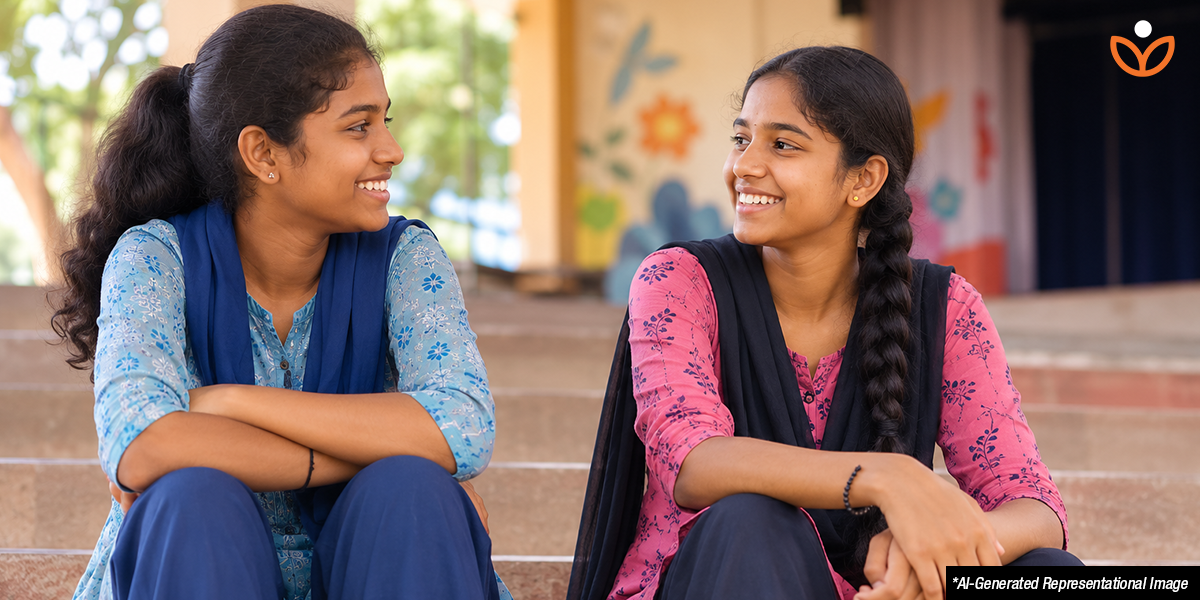
Rose and Sherin are in their early adolescence. Sitting on the steps of the open auditorium at the CCI, I was welcomed by warm smiles. As a first-time visitor to their CCI, they were eager to know who I was and where I had come from. Their questions came one after another with curiosity. First, they asked my name. Then, they wanted to know who lived with me at home. Their third question caught me off guard: “What about your father?” The moment we shared our losses with each other, we became friends. We discovered that even loss could be celebrated. For Rose and Sherin, it was the first time they had met someone who carried a story similar to theirs, yet still lived with a family. In that shared experience, they found hope.
Wandering through the town, collecting money to pay for his mother’s cremation, Balu, a 15-year-old boy, caught the attention of the District Administration. He was soon brought to a CCI.
Life inside the CCI followed a strict routine. The timetable and the intermittent ringing of the bell dictated every aspect of the day. For Balu, who had been surviving on his own terms, this rigid structure felt suffocating. It turned him into a dissenter.
“Why should I eat just because the bell rings?” he once asked.
His question was never truly answered. Soon, he was labelled a rebel.
Unlike Rose, Sherin and Balu, Guna’s story is different.
Guna had just completed Grade 12. Like many 17-year-olds, he stood at the crossroads of adulthood—uncertain, confused, and searching for direction.
His mother, Iswari, lived with an enlarged thyroid. She was often teary, anxious, and withdrawn, constantly worrying about her children’s future. As a single parent, she struggled to keep her family together under one roof.
Our follow-up visits gradually gave Iswari something she had not had for a long time—a plan. Together, we unpacked each concern, one at a time, and explored a way forward.
The first step was her own health. Iswari decided to seek treatment and successfully underwent thyroid surgery. During her recovery, Guna and a close relative cared for her. At the same time, Guna enrolled in college and took up a part-time job to help cover the family’s expenses while his mother recuperated.
With each visit, the atmosphere in their home changed. The family welcomed us back, not only to share their progress but also to continue planning for the future. What had once felt like an overwhelming burden slowly transformed into a series of manageable steps, each bringing them closer to stability and hope.
Rose and Sherin continue to hold on to the hope of reuniting with their families. Balu still carries questions that no one has truly answered. Their stories remind us that these crises did not begin at the gates of the CCI. They began much earlier.
Guna’s story offers an opportunity to reframe life in the face of challenging circumstances. Over time, his family gradually came to accept their reality. Our effort was to give them the confidence and a gentle push to take one step at a time.
Behind the warm smiles children wear, lie stories of resentment, confrontation, and extraordinary resilience. For children living in CCIs, the wait for the return is seldom clarified.
The packed emotions and lived experiences of children in CCIs are often reduced to what are termed “cases for counselling.” The responses more often tend to be temporary; quick fixes to complex and deeply rooted challenges.
Yet these emotions are not limited to institutional spaces. A similar blend of feelings can be found within family settings as well. To a large extent, families have an inherent capacity to heal and recover when supported appropriately.
There are many compelling circumstances and situations that bring children to the doors of CCIs. Miracle Foundation India works with communities using a strength-based approach that recognizes and builds on the abilities of families to withstand and overcome crises, enabling children to remain safely within their families. This is the focus of our prevention programs across various locations.
Miracle Foundation India consistently emphasizes collaboration and partnership with existing systems and programs, fostering a more natural and sustainable healing process within communities. These efforts help communities recognize the fine line between crisis and resilience, and between merely surviving and truly thriving.
(The names used in this blog have been changed in accordance with Miracle Foundation India’s Child Safeguarding Policy)
Author: Yamuna Menon, State Head, Tamil Nadu & Kerala, Miracle Foundation India
The views expressed in the article are the author’s and do not necessarily reflect those of Miracle Foundation India.