
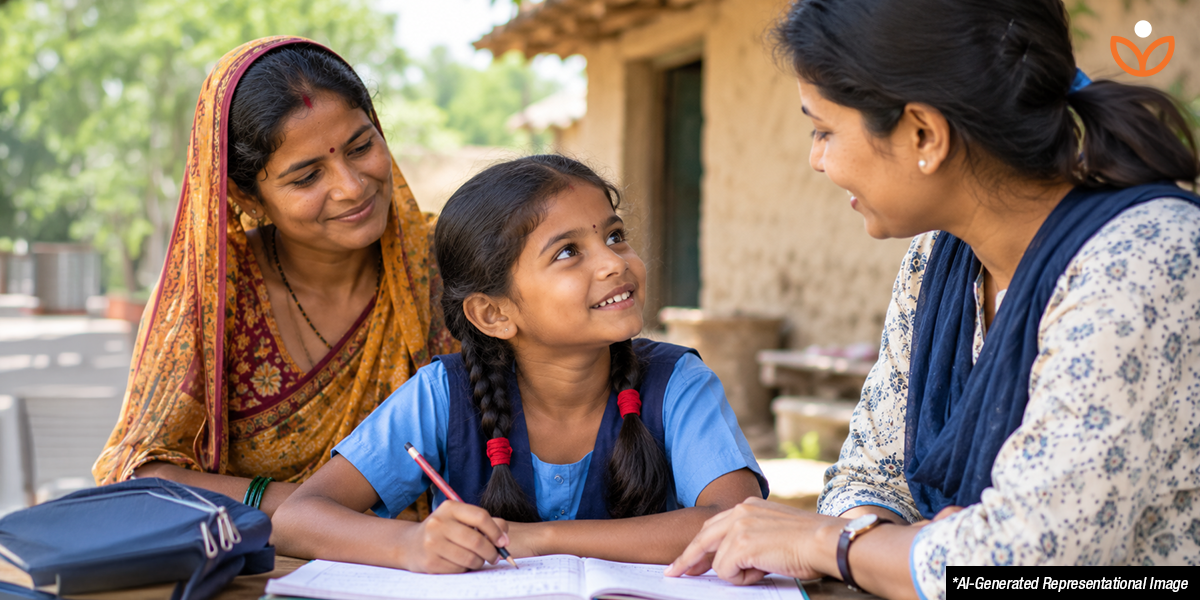
For every child, family is the first source of love, belonging and protection. Families can go through periods of difficulty that temporarily affect their ability to provide care, and for some children, this can mean spending time in a Child Care Institution. When it is safe and in the child’s best interests, returning to family is an important step towards restoring that care. But coming home does not mean every challenge has been resolved; a child may need time to readjust, rebuild relationships and reconnect with school and community, and families may still be navigating the circumstances that led to separation in the first place.
This is why what happens after reintegration deserves as much attention as the decision to reintegrate itself.
Why: The law already says so
This is not simply good practice; it is what India’s own child protection framework asks for. Section 37 of the Juvenile Justice (Care and Protection of Children) Act, 2015 provides for the restoration of a child to parents, guardian, or family and, importantly, empowers the Child Welfare Committee to direct follow-up and coordinate with the District Child Protection Unit, the State Government (CWC), and other agencies. Section 39 of the JJ Act treats reintegration and social reintegration as ongoing processes, preferably taking place through Family-Based Care rather than as a single event. Rule 82 of the Juvenile Justice Model Rules, 2016 goes further, specifically requiring follow-up and monitoring after reintegration, and Mission Vatsalya frames family strengthening, rehabilitation, non-institutional care and aftercare as connected parts of the same system, not separate programs.
Read together, these provisions make a simple point: a family’s circumstances at the moment of reintegration are not fixed. A caregiver may lose a source of income. A child may struggle to settle back into school. A new challenge may emerge that wasn’t present when the decision to reintegrate was made. None of this means reintegration has failed; it is the reality of family life. What matters is whether the child and family have the support and connections they need to respond when it happens. Follow-up is how the system finds out.
Who: Two groups, one continuum
Discussions of follow-up tend to focus only on children who have already been reintegrated. But the same logic applies earlier in the chain, to children and families at risk of separation in the first place.
A family under strain from a financial shock, a caregiver’s illness, or the loss of housing may be on the edge of a decision to place a child in institutional care, even though separation is rarely what the family wants. Gatekeeping, staying engaged with a family before separation happens, understanding what’s actually going on, and connecting them to support early uses the same skills and the same relationships as post-reintegration follow-up. Treating these as one continuum, rather than two separate workstreams, means the social workforce is building sustained relationships with families rather than only stepping in at two disconnected checkpoints: before a child enters care, and after they leave it.
This matters because family strengthening services are most effective when they reach families *before* a crisis forces separation, not only afterwards. A follow-up system built only around reintegrated children misses the families where the right support, given early, could have prevented separation altogether.
How: What follow-up actually looks like
For reintegrated children, the JJ Model Rules prescribe a schedule — follow-up at 15 days, 1 month, 3 months, 6 months and then yearly, up to two years. This schedule matters because outcomes take time to emerge. A family assessment tells us how things stand at the point of reintegration; follow-up tells us what happens afterwards, and gives children and caregivers repeated opportunities to talk about their experience, have progress recognized, and have concerns caught early.
Consider a picture, drawn from patterns seen across many cases rather than any single child. A family reintegrates after a period of separation caused by the caregiver’s job loss. At the point of reintegration, the caregiver has found casual work, and the child is enrolled in school. Three months later, a follow-up visit finds the casual work dried up within a few weeks, and the child has been missing school two or three days a week to help at home. None of this would show up in a one-time assessment; it becomes visible only because someone returned to ask how things were actually going. With that information, the social worker can connect the caregiver to a livelihood scheme and work with the school on attendance, addressing the gap before it widens.
The same principle applies on the prevention side. A composite example: a CWC receives a report that a caregiver, recently widowed, is struggling to manage three children alone. Rather than treating institutional placement as the first option, a social worker stays engaged with the family over several weeks, connecting the caregiver to a survivor pension scheme, arranging community childcare support during work hours, and checking in as these supports take effect. Separation is avoided not through a single intervention but through sustained contact.
Neither example works without the wider system. The social workforce maintains contact and identifies concerns; CWCs ensure a case doesn’t quietly fall off the radar; schools, health workers and community structures often notice a change before it reaches a formal review. A referral to a scheme or a school enrolment is a starting point, not proof that support is actually reaching the family; a referral doesn’t guarantee access, and enrolment doesn’t guarantee attendance. Staying connected is what turns a paper outcome into a real one.
The transition home is not only practical; it is emotional. Re-establishing relationships with caregivers and siblings can take time, and children may carry experiences they find difficult to express. Where needed, counselling gives children and caregivers a safe space to work through this, which is why follow-up should go beyond confirming a child is still at home and also ask how the child is experiencing the transition.
Challenges
None of this is straightforward in practice, and it’s worth naming why:
– Caseloads: A thinly staffed social workforce, tracking many families across a multi-year schedule, makes sustained, quality follow-up hard to protect against being reduced to a quick check-in.
– Mobility: Families that migrate for work can lose contact with the social worker or CWC that knows their history, breaking continuity at the exact moments it matters most.
– The referral gap: A referral made is not the same as a service accessed; schemes and enrolments can exist on paper without reaching the family in practice, and this gap is easy to miss without deliberate follow-through.
– Compliance drift: Where follow-up is measured only by whether a visit happened on schedule, it can become a documentation exercise rather than a genuine conversation about how the family is actually doing.
– Stigma and disclosure: Caregivers may hesitate to share that they’re struggling, out of fear of judgment or of the child being separated again, which can mask real risk from the very system meant to catch it.
– Coordination: Schools, health services, CWCs and the social workforce don’t always share information easily, so a concern visible to one part of the system may not reach the part that can act on it.
What tends to work
A few practices consistently make follow-up more than a scheduled visit:
– Continuity of relationship. Where possible, the same social worker or case manager stays with a family across assessment and follow-up. Trust built once doesn’t have to be rebuilt with every visit.
– Hearing from the child directly, in age-appropriate ways, rather than relying only on a caregiver’s account of how things are going.
– Following referrals through to access, not just to submission; confirming a scheme reached the family or a child is actually attending school, not just enrolled.
– Community-based monitoring between formal visits: child protection committee members, Aanganwadi workers, teachers, health workers and neighbours are often the first to notice a change.
– CWC oversight that keeps cases visible over time, rather than closing the file at reintegration.
– Peer support among caregivers, which can reduce the stigma of asking for help and build the kind of family resilience that outlasts any single intervention.
What follow-up is actually for
If success is measured only by whether a child has returned home, the system knows where the child is, not how the child is doing. A fuller picture considers whether the child is safe and well, attending school, and rebuilding relationships at home; whether caregivers are better equipped to respond to the child’s needs; and whether the family is more confident managing the next challenge, whatever it turns out to be.
Done well, follow-up does three things at once: it builds awareness among families of the strengths they already have and the services available to them; it converts referrals into actual access to family strengthening services; and, over time, it builds the kind of resilience that means a family can absorb a future shock without needing the child protection system to step in again.
At Miracle Foundation India, this understanding continues to shape our work through family strengthening, investment in the social workforce, and collaboration with government and community stakeholders, so that children do not just return to their families, but are able to stay, grow and belong. Chapter 4 of Miracle Foundation India’s Guidebook for Child Welfare Committees provides CWCs with a practical reference for follow-up after reintegration.
Reintegration is a milestone. What happens after it, and what happens before separation ever occurs, helps make that return last.
Author: Upasana Upadhyaya, Assistant Manager- Program Communication, Miracle Foundation India
The views expressed in the article are the author’s and do not necessarily reflect those of Miracle Foundation India