When I entered this work, it hit me quickly that development sector communication here isn’t the cinematic, perfectly packaged version you see in films or corporate reels; it feels real, raw, and human. It feels far more personal. Here, every message carries a life inside it; someone’s struggle, someone’s hope, and the quiet work of the teams who stand beside them. This work changed how I understood people, purpose, and impact.
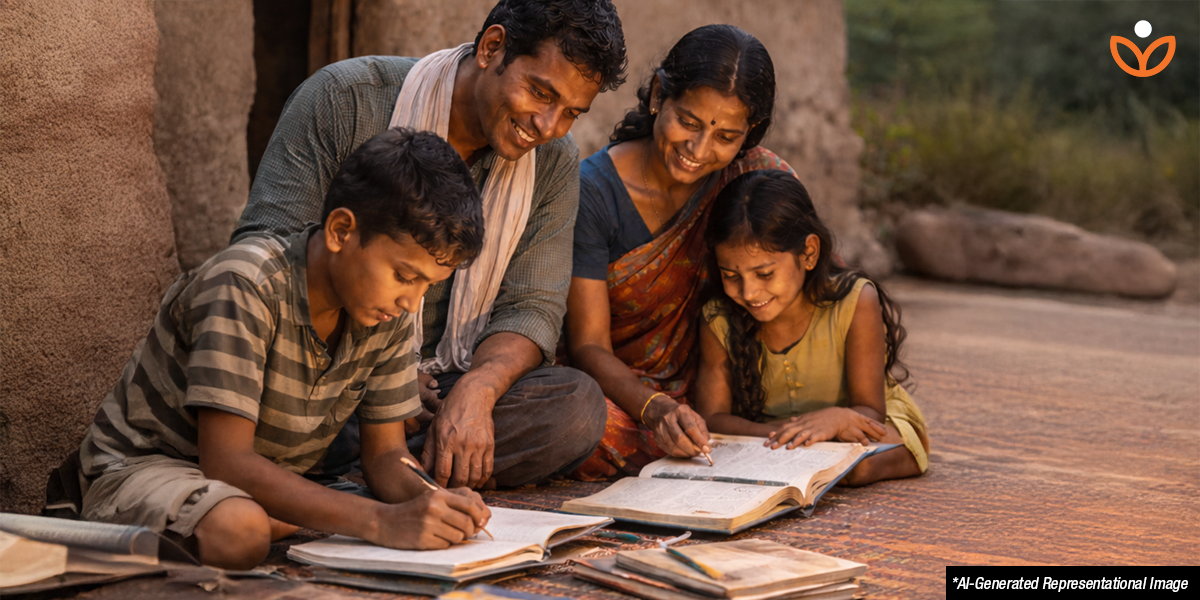
During one of my field visits to a tribal village in Jharkhand, as part of my work with Miracle Foundation India, I met a mother whose son had recently been reintegrated from a Child Care Institution. Her young daughter stood close beside her as we sat outside her mud house. She looked at both her children and said softly, “I sleep with my children close to me… what more do I need?” Life was still hard, but she finally felt supported. With a shy smile, she told me the parenting guidance and counselling had helped her believe in herself again. And then, almost in a whisper, she said, “I didn’t know I could manage alone.”
That tiny sentence carried the weight of an entire programme, louder than any report, more honest than any data point. Their story can be read here.
Experiences like this shaped how I approach communication at Miracle Foundation India. For me, storytelling is not about simplifying information; it’s about finding the human heartbeat within it. Every field visit, every conversation with a social worker, and every small shift in a family becomes a thread in a larger fabric of hope, resilience and courage.
Some days my work is technical, shaping tone, editing drafts, choosing the right words. But at its core, communication is about people. It means listening closely, understanding their journeys, and ensuring their voices are shared with honesty and intention. Whether I’m supporting program colleagues to write their own stories or creating narratives that explain complex ideas simply, my role is to make sure the human experience stays at the centre.
Over time, communication has become more than a profession. It has become a bridge, steady and intentional, and in my field, connecting the ground realities of child protection with the distant world of decision-makers, donors, and people who want to help but don’t always know how. Sometimes a story reaches a policymaker who reconsiders a decision. Sometimes it helps a donor see a child not as a beneficiary, but as an individual with dreams. And sometimes, it reaches a child who realises their voice matters too. And at times, it quietly resonates with the social workforce on the ground as well, reflecting their efforts and reminding them that the work they do every day truly matters.
Working in this space often feels like sending small containers of truth, care, and hope into the world. You never fully know who they will reach, but you trust that they will land where they are needed. And if even one story I tell makes someone pause, reflect, or care a little more, then I know I’m exactly where I’m meant to be.
Because sometimes, all it takes is a single whispered sentence, “I didn’t know I could manage alone”, to remind us why storytelling matters.
Author: Upasana Upadhaya, Assistant Manager- Program Communication, Miracle Foundation India
The views expressed in the article are the author’s and do not necessarily reflect those of Miracle Foundation India.