
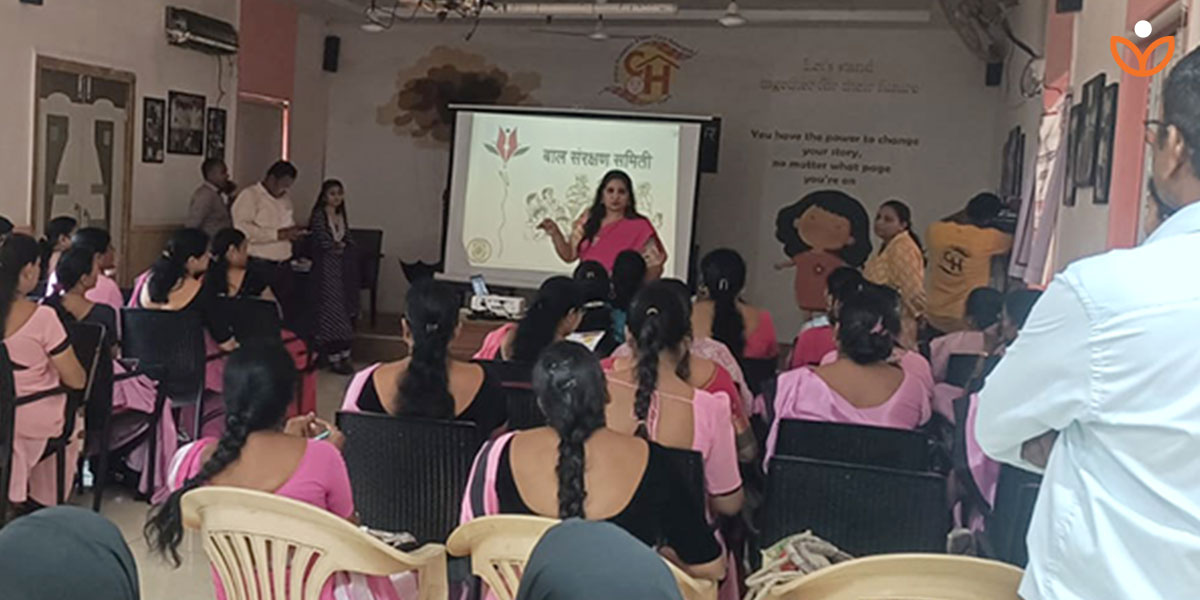
Strong child protection systems are built not only through policies and procedures, but also through the people who work every day to ensure that children receive the care, protection, and support they need. For Pallavi Jadhav, Protection Officer (Institutional Care) at the District Child Protection Unit (DCPU), Thane, Maharashtra, this means strengthening systems of care while working closely with children, families, and stakeholders to ensure decisions are guided by each child’s best interests.
Since 2019, Pallavi has worked with Child Care Institutions (CCIs), Child Welfare Committees (CWCs), government departments, and families across states to support children in need of care and protection. Her role includes facilitating inter-state repatriation, reviewing Social Investigation Reports (SIRs), and helping ensure that children receive appropriate care and support throughout their journey.
Her association with Miracle Foundation India further strengthened her commitment to Family Strengthening and quality case management. Since then, she has championed capacity-building initiatives for CCI staff across the district, conducting trainings on Social Investigation Reports (detailed assessments of a child’s family, care situation, and needs) and Individual Care Plans (personalized plans that outline the support and services a child requires).
Alongside her responsibilities in Institutional Care, Pallavi also handles Non-Institutional Care (NIC) cases involving street-connected children, children engaged in begging, and illegal adoption. One case that left a strong impact on her involved a woman who was selling her newborn children through a middleman network.
Acting on information received from a trusted source, Pallavi coordinated with local NGOs, hospital authorities, and law enforcement agencies to monitor the case closely. Following the child’s disappearance shortly after birth, swift action led to the rescue of the baby from another district and placement in a Specialized Adoption Agency. The experience reinforced the importance of vigilance, coordination, and timely intervention in protecting children from exploitation and trafficking.
For Pallavi, effective child protection requires strong collaboration between institutions, communities, and families. Looking ahead, she hopes to further strengthen the capacities of Child Care Institutions and child protection functionaries across the district, helping build a stronger network of support for children and families. She believes that with the right systems and partnerships in place, more children can experience the care, connection, and belonging they deserve.